Vietnam Durian Boom Fuels Farmer Wealth
Vietnamese coffee farmers are switching to durian cultivation to capitalize on massive Chinese demand, with exports projected to hit $4 billion this year.
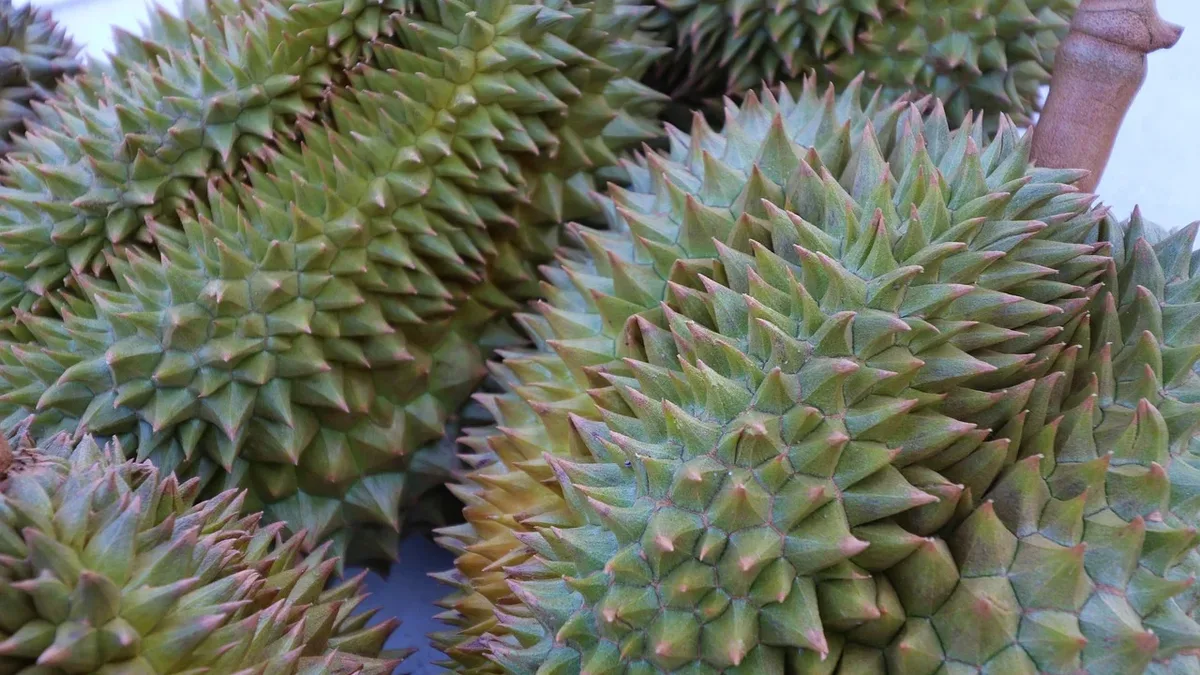
Vietnam's durian exports are projected to reach US$4 billion this year, a massive jump from US$180 million in 2021. Farmers in the coffee-rich Central Highlands are switching crops to chase the lucrative Chinese market for the pungent fruit.
According to a report from AFP, Vietnam only officially entered the Chinese durian market after a 2022 trade protocol. Yet, by last year, it had become China's biggest supplier by volume, ending Thailand's near two-decade dominance. The area dedicated to durian in Vietnam has soared more than fivefold to 200,000 hectares nationwide over the past decade.
From Coffee to King of Fruits
"You can live okay with coffee, but it's durian that makes you rich," said farmer Pham Xuan Lan, 56, to AFP journalists. An early adopter, Lan diversified his crop two decades ago and now has 400 durian trees in Dak Lak province. He expects to make US$76,000 this year, compared to just US$10,000 if he had stayed with only coffee.
"With durian, I bought a car, houses for my children and built a villa for my family," Lan said. His farm produces 60 tonnes of fruit annually, which is driven in frozen containers thousands of kilometres north into China. Other local farmers have followed, focusing on premium varieties like Ri6, Musang King and Dona.
The shift is visible. During the August-October harvest, Dak Lak's roads are packed with trucks. At a durian festival this month, 525 vehicles formed what Guinness World Records declared the largest ever parade of fruit-carrying vehicles.
China's Social Media-Driven Demand
The boom is fueled by voracious demand from China, amplified by social media popularity. On Douyin, China's equivalent of TikTok, videos of users cracking open durian with their bare hands have been watched billions of times. Influencer Liulianzi said in a clip liked more than 17,000 times, "This tastes really sweet. It's almost like it's been coated in sugar."
Once a luxury, increased competition and improved transport have made durian more affordable. China imported almost US$7.5 billion worth of fresh durian last year, a near 12-fold rise from 2015. At a tasting event in Beijing last month, consumer Ada Song told AFP she had spent almost 1,000 yuan (US$150) on the fruit in recent weeks, trying nearly 20 different varieties.
China is now seeking to grow its own durian on more than 3,000 hectares in Hainan province. However, durian expert Feng Xuejie at the Hainan Academy of Agricultural Sciences acknowledged, "our Hainan durians will always be just a supplement to Southeast Asian durians. It's not even a competition."
Risks of Oversupply and Climate
Despite the boom, concerns are mounting in the Central Highlands. The Vietnamese government warned in early August of the "risks of oversupply and loss of quality control as the planted area is increasing rapidly." Farmers anxiously eyed a recent price crash in Malaysia, blamed on a bumper harvest.
Durian growers across Southeast Asia also face climate change. In Malaysia, soaring temperatures mean more watering, fertiliser, and pruning, while costs have climbed. Some farmers are turning to technology like sensors to monitor conditions.
Growing durian is not guaranteed success. Lan likened it to "raising a child - I can give you all the tricks but I cannot guarantee you similar success." He still grows coffee on his leased land to hedge his bets.
For some, the dream has already failed. A farmer named Hung switched entirely from coffee to durian five years ago but switched back two years later. "I could not do it. I failed," the 42-year-old said. "So I would never go back to durian again."