Bharat Commerce to Hit $90 Billion as Next 300 Million Shop
India's e-commerce market in tier 2 and 3 cities is projected to grow from $25-30 billion to $80-90 billion within five years, driven by 300 million new
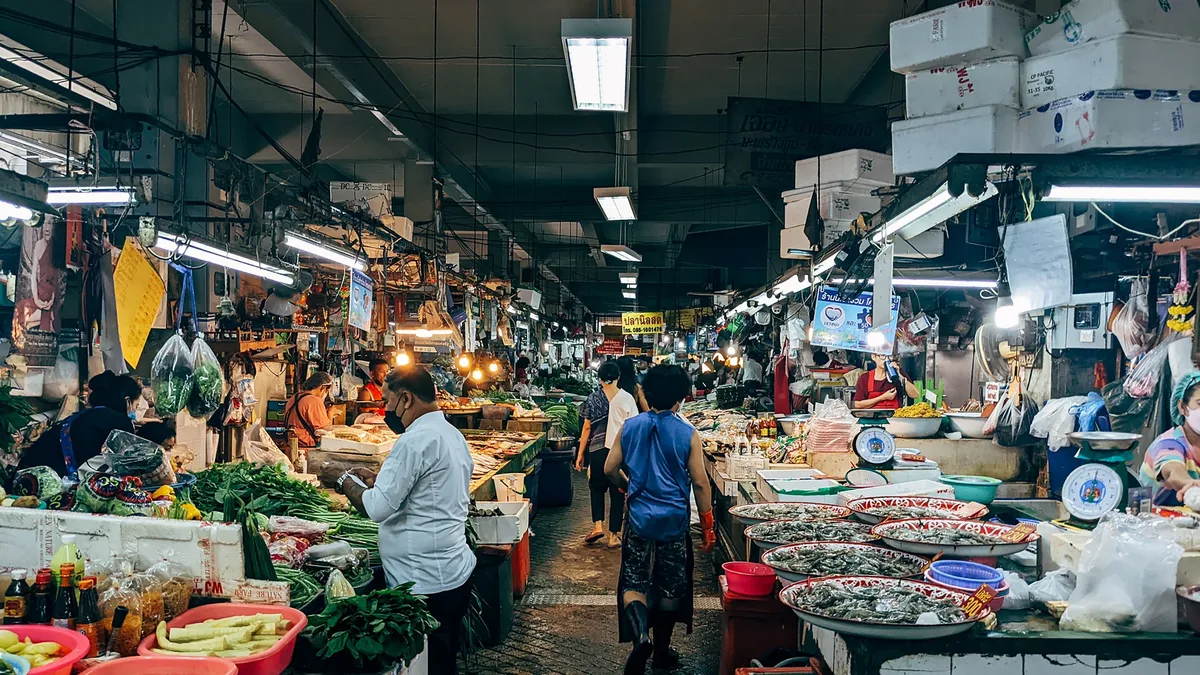
India's next e-commerce boom will be powered by 300 million new consumers from smaller cities. The tier 2 and 3 market is projected to nearly triple from $25-30 billion currently to $80-90 billion over the next four to five years, according to a thesis on Bharat Commerce from Stellaris Venture Partners.
Naman Lahoty, a Partner at Stellaris Venture Partners, told ETRetail that this demographic represents the industry's next major inflection point. While these cities contributed 65% of new online shoppers and 50% of new orders in 2025, their online retail penetration remains around 4%, far below the mid-double-digit rates seen in metros.
The New Value-Conscious Consumer
The opportunity stems from a fundamental shift. Digitally native consumers aged 20-35 are now entering the consumption economy. Their aspirations are shaped by social media platforms like Instagram and YouTube, but their spending capacity remains limited. This creates a paradox where consumers want better brands and products at price points most current e-commerce platforms cannot serve.
Traditional e-commerce economics are built around average order values (AOV) between Rs 500 and Rs 3,000. Success in the Bharat market, however, will require operating at significantly lower AOVs paired with much higher transaction volumes.
Lahoty outlined the different economic model needed. Contribution margins might be 12-15% instead of 20-25%, but volumes could be three to five times higher than platforms focused on tier 1 consumers. "Building for Bharat is fundamentally different," he said. "You are optimising for volume than margins specifically."
Redefining Commerce Models
Quick commerce will also look different outside major metros. Lahoty does not expect a 10-minute delivery model to dominate. Instead, a same-day model that batches orders to maximize warehouse and delivery fleet utilization is more likely. "People are happy even if they are able to get the products in a few hours or even the same day," he noted.
This shift is accelerating a move from unbranded to branded consumption. Categories like apparel, beauty and personal care (BPC), jewellery, and home and kitchen are seeing this trend. Social media acts as a key discovery engine, with consumers often taking screenshots to find similar products locally, but it is not yet the primary shopping channel.
Lahoty identified several specific opportunities for new platforms. These include liquidation-led commerce for surplus FMCG, beauty, and fashion inventory, and offering trend-led products at value prices, especially in BPC where demand for specific ingredients is high.
Beyond Geography: A Mindset
For Lahoty, 'Bharat' is less about a specific geography and more about a value-conscious consumption mindset. This consumer can be found even in tier 1 cities. The core challenge is that current platforms are built for the top 30-50 million users. "Unless we specifically build for the next 300 million users, we will not see that inflection point in e-commerce," he stated.
The entire sector must adapt to serve this vast new audience. Platforms must combine aspiration with affordability, speed, and a relevant assortment to unlock the $90 billion opportunity.