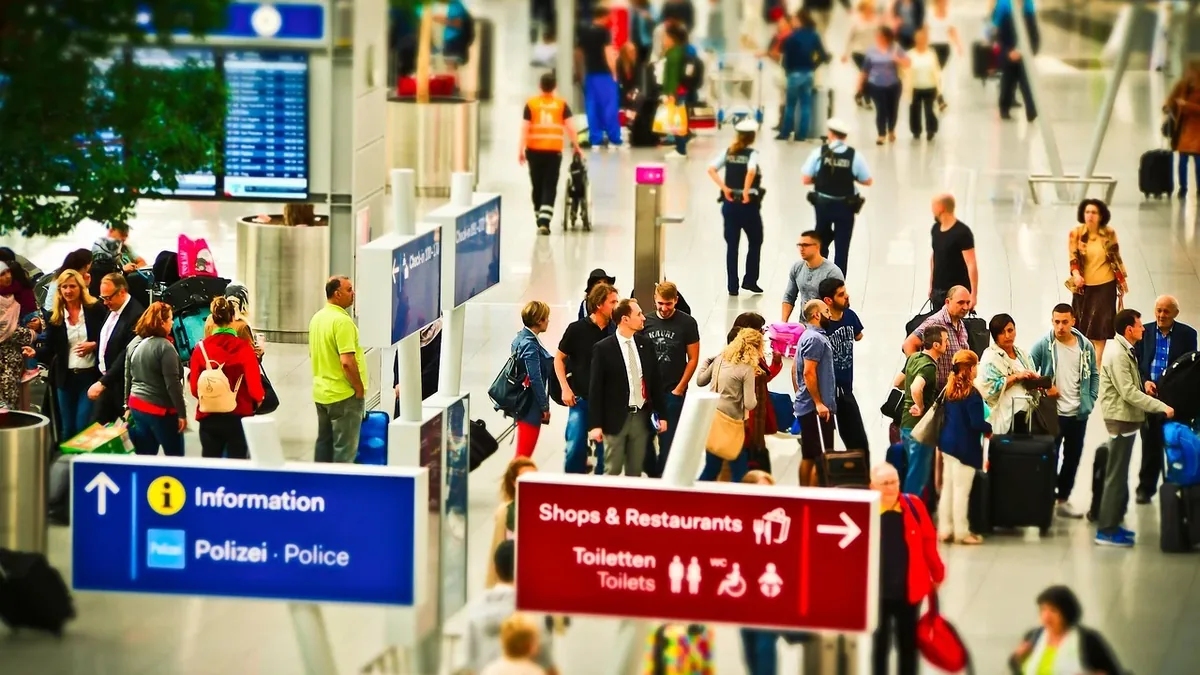
Airport And Transit Retail
| Channel type | Airport and transit retail |
|---|---|
| Primary customer state | In transit |
| Typical product categories | Duty-free, travel essentials, luxury goods, souvenirs |
| Typical lease model | Concession-based |
| Revenue model | High-margin, high-rent |
| Foot traffic pattern | High-volume, time-constrained |
| Operating environment | Secure, regulated zone |
| Competitive dynamic | Monopolistic or oligopolistic by location |
Origin and history
The modern concept of a dedicated retail channel within airports and transit hubs originated in the United States and Western Europe during the mid-20th century. Its development was directly tied to the commercialization and rapid growth of the airline industry in the post-war era. Initially, these retail offerings were minimal, often limited to basic newsstands and small gift shops selling postcards and souvenirs. The channel expanded significantly from the 1970s onwards as airport authorities recognized non-aeronautical revenue as a critical financial stream. The model was later adopted and amplified globally, particularly in Asia and the Middle East, from the late 20th century. The evolution of duty-free shopping, beginning earlier in the mid-20th century, became a central pillar of this retail channel's economic model.
What it is for
This retail channel exists to serve the specific, captive consumer base of travelers moving through transportation nodes. Its primary commercial purpose is to generate high-margin non-travel revenue for airport operators and concessionaires. It is designed to fulfill immediate travel-related needs, from last-minute necessities to travel-sized products. A core function is to provide distraction and entertainment during often lengthy waiting periods inherent to modern travel. For many international travelers, it serves as a primary venue for purchasing duty-free goods, leveraging tax advantages not available in traditional retail. The channel also functions as a brand showcase, allowing premium brands to access a global, affluent audience in a controlled environment.
Overview
Airport and transit retail constitutes a specialized, location-locked ecosystem of stores, kiosks, food and beverage outlets, and services operating within the secure and non-secure areas of airports, train stations, and cruise terminals. It is characterized by exceptionally high foot traffic of a transient consumer demographic with specific psychographic traits, including time-sensitive purchasing and a propensity for discretionary spending. The product mix is heavily curated, emphasizing convenience, travel essentials, luxury goods, and locally-themed souvenirs. Rentals to retailers are typically structured as concession agreements, with operators paying high fees or a percentage of sales to the transit authority. The environment is highly regulated, with operations constrained by security protocols, space limitations, and the operational schedules of the transport hub. This channel is distinct from high-street retail due to its captive audience, extended operating hours, and the unique blend of necessity and impulse-driven purchasing behavior.
What to know
Prices in this channel are almost universally higher than on the high street, reflecting the premium cost of concession rents, logistics, and the value of a captive audience. Product assortment is deliberately edited, with a focus on best-selling brands and items, meaning choice is often limited compared to a full-scale department store. The duty-free component applies only to passengers traveling across international borders, and specific allowances and regulations vary drastically by country. Purchases, especially liquids over 100ml, are subject to security restrictions and may need to be placed in sealed, tamper-evident bags for certain journeys. Retail space is often dominated by a few large travel retail specialists who operate multiple branded stores under a single concession agreement. Understanding that store layouts are designed to maximize impulse buys and that time pressure is a key sales driver is crucial for both retailers and consumers navigating this environment.
Common questions
What exactly is duty-free, and how does it work? Duty-free means the goods are exempt from certain national taxes and duties, but they are not inherently free or always the cheapest option, especially when compared to discount retailers elsewhere. Are airport prices always more expensive? While some duty-free items like alcohol and tobacco can offer savings, most general merchandise carries a significant price premium due to the operational costs of the channel. Can anyone shop at an airport store? Only passengers with a valid boarding pass for travel that day can access the retail areas located beyond security checkpoints; landside stores may be open to the public. What happens to my duty-free liquids on a connecting flight? They typically must be packed in the specially provided sealed bag with the receipt visible and may be subject to re-inspection at security transfer points. Is it better to buy duty-free on departure or arrival? This depends on the destination country's import allowances and taxes; arrival duty-free is often more restrictive. How are brands selected for airport retail? Selection is highly competitive, favoring brands with strong global recognition, high margins, and products that align with travel needs or gift-giving occasions.
Pros and cons
The channel offers extreme convenience for travelers, providing essential items, meals, and last-minute gifts in a single, secure location. For consumers, the potential benefit of duty-free savings on specific luxury categories like perfumes, spirits, and tobacco can be significant. A major con is the substantial price inflation on most non-duty-free items, which can feel exploitative to travelers with no alternative options. The retail environment is notoriously stressful for staff and operators due to rigid security protocols, complex logistics, and the pressure of extremely high rent costs that demand consistent sales performance. A common mistake for new entrants is underestimating the operational complexity, from stringent supply chain controls to the need for 24/7 staffing, which can erode profit margins despite high sales volumes.
Who it suits
This channel suits large, deep-pocketed travel retail conglomerates capable of managing multi-brand portfolios and sustaining the high capital costs of concession bids and fit-outs. It is ideal for globally recognized luxury brands in sectors like cosmetics, spirits, fashion, and confectionery seeking high-margin showcase environments. Established fast-food and cafe chains with efficient, scalable service models are well-suited to meet the demand for consistent, quick meals. The model does not typically suit small, independent retailers without the financial resilience to handle variable passenger flows and high fixed costs. It is also a poor fit for brands with low price points, complex product education requirements, or niche audiences that do not align with the broad, transient passenger demographic. Ultimately, success in this channel is reserved for operators who can balance premium branding with operational efficiency under uniquely constrained conditions.
Latest Airport And Transit Retail news
Latest reporting

CP Axtra's Go Fresh Mini-Supermarkets Drive Thai Retail
CP Axtra has expanded its Go Fresh mini-supermarket chain by 77 stores to 2,173 over three years while halting new supermarket openings, reflecting a

India Gold Import Duty Hike Fuels Parallel Market
India's gold import duty hike to 15% has revived the informal trade, with imports halving in August. Retail buyers are securing discounts up to 6%...

Skechers shifts to experiential retail in Southeast Asia
Skechers has grown from under 10 to over 1,000 points of sale in Southeast Asia since 2009. The brand is now pivoting from pure scale to localized...
Circana Report Analyzes Shifting Retail Growth Rules
Circana's 2026 industry report states that evolving consumer priorities and complex channel mixes are creating a noisier environment, making strategic
Commodity Inflation Erodes GST Rate Cut Gains for Retail
A year after GST rationalisation, rising commodity prices have eroded most consumer price benefits. While auto sales surged, FMCG and apparel sectors...

Skechers shifts Asia strategy to performance
A year after going private, Skechers is deepening its focus on performance categories and tailored retail experiences across Asia, according to...