Cash And Carry Wholesale
| Business model | Member-only wholesale distribution |
|---|---|
| Typical customers | Registered businesses (e.g., restaurants, retailers) |
| Product range | Food and groceries, general merchandise, appliances |
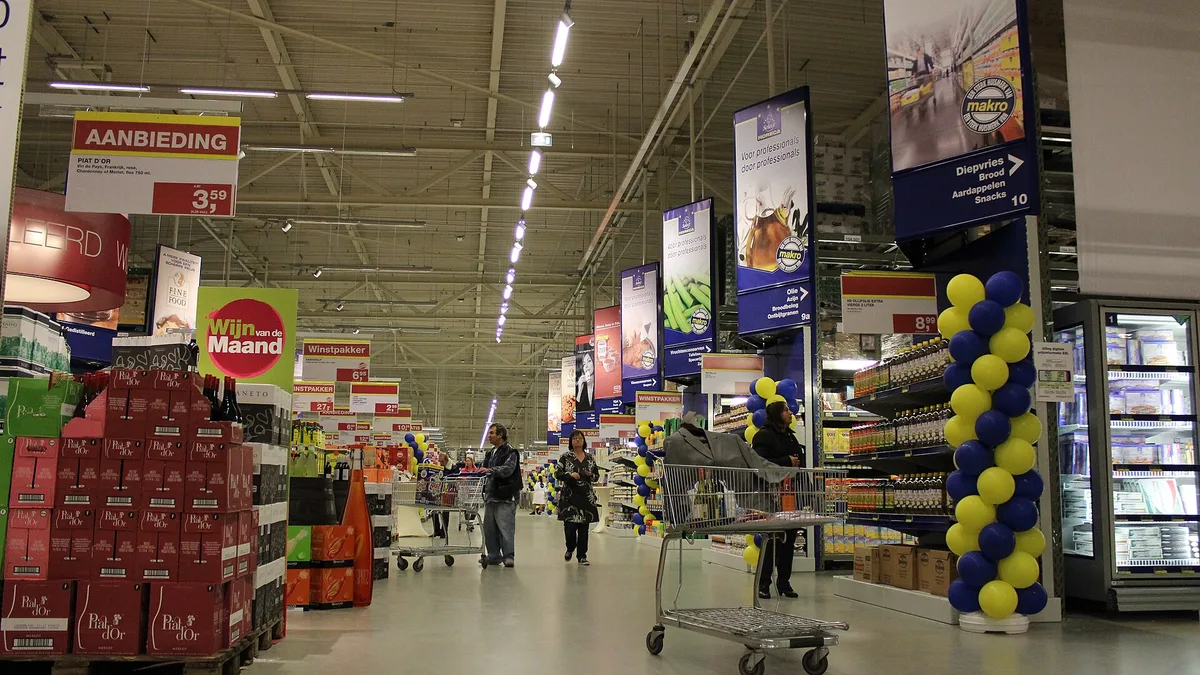
| Shopping format | Warehouse club with bulk/pallet displays |
| Membership requirement | Yes, for purchasing |
| Typical unit of sale | Case or multi-pack |
| Channel type | Cash and carry |
Origin and history
The cash and carry wholesale format originated in the United States during the early decades of the twentieth century. Its development is closely tied to the rise of automobile ownership and the expansion of independent small businesses. Pioneering companies created member-based warehouses where retailers could buy goods in bulk without the need for a dedicated sales representative. This model was designed to lower distribution costs by eliminating delivery and credit services, passing the savings directly to the business buyer. The concept saw significant expansion and formalization in the post-World War II economic boom, as the demand for efficient supply to a growing number of small retailers and foodservice operators increased. The format was subsequently adopted and adapted globally, becoming a staple component of the distribution landscape in Europe, Asia, and other regions from the latter half of the twentieth century onward.
What it is for
The cash and carry wholesale channel exists to supply goods in bulk quantities to business customers for the purpose of resale or professional use. Its primary function is to act as an intermediary link between large-scale manufacturers or importers and the small to medium-sized enterprises that form its clientele. The channel serves independent grocery retailers, convenience store owners, restaurateurs, caterers, and other foodservice professionals who require regular, high-volume purchases. It is specifically designed for trade buyers who can transport their own purchases, paying with immediate funds, which defines the "cash and carry" operational method. The model is not intended for the general public, though some operators may allow public access under specific membership schemes. Its core purpose is to provide a self-service, low-cost purchasing environment that supports the operational viability of small commercial entities.
Overview
A cash and carry wholesale outlet is a large, warehouse-style facility that stocks a vast range of products, predominantly focused on food, beverages, and essential non-food items for retail and hospitality. The operational model requires customers to be registered businesses, verifying their trade status before granting access to the wholesale pricing. Inside, the environment is utilitarian, with goods displayed on pallets or simple shelving, emphasizing efficiency over retail appeal. Customers navigate the warehouse with large trolleys or flatbed carts, selecting items, handling their own logistics, and transporting purchases in their own vehicles. Payment is typically required immediately via cash, debit card, or business account, with no credit offered, aligning with the low-overhead principle. This channel competes directly with delivered wholesale distributors and, increasingly, with the wholesale clubs that also serve small businesses and individual members.
What to know
Business customers must provide proof of their trade status, such as a business license, tax registration, or invoice from a supplier, to open an account and gain entry. Purchases are almost always made in bulk, with pack sizes significantly larger than those found in consumer retail, such as full cases, large sacks, or big containers. The pricing structure is typically displayed as a per-unit cost exclusive of sales tax, with the final tax applied at the point of sale based on the customer's business registration. Product availability can be volatile, with stock levels and brands changing frequently based on manufacturers' deals and purchasing agreements, requiring flexibility from buyers. While the focus is on groceries, many cash and carry operators also stock a selection of janitorial supplies, basic catering equipment, and disposable packaging. Understanding the specific buying patterns and deal cycles of a local cash and carry is crucial for maximizing cost savings, as promotions and closeout offers can provide significant advantages.
Common questions
A frequent question is whether individuals without a business can shop at a cash and carry, and the answer generally is no, though some operators may offer limited public membership for a fee. Buyers often ask about the minimum purchase requirements, and while there is rarely a formal minimum spend, the bulk pack sizes inherently create a high-volume, high-value transaction. Another common inquiry concerns the return policy, which is usually strict, often limited to faulty goods only, due to the trade nature of the sales and the challenges of restocking bulk items. Customers regularly question the difference between a cash and carry and a wholesale club, with the key distinction being the former's exclusive trade focus versus the latter's broader membership base that includes consumers. There is also frequent confusion over pricing, as the listed price is often for a case or pack, not a single consumer unit, requiring careful calculation of per-item cost. Many new users ask about delivery options, and the definitive feature of the classic cash and carry model is that it does not provide delivery, placing the logistical burden and cost on the purchaser.
Pros and cons
The primary advantage is significantly lower per-unit cost on bulk items, directly improving the gross margin for a retailer or restaurateur. The format offers immediate product availability and control over selection, allowing buyers to inspect goods and take possession instantly without waiting for delivery. A major con is the substantial requirement for on-hand capital, as purchases are large and require immediate cash payment, which can strain cash flow for very small operations. The model also demands significant investment in storage space at the buyer's premises and suitable transport vehicles, creating hidden costs. Buyers often regret choosing this channel when they underestimate the labor and time cost of personally handling logistics, including loading, transporting, and unloading heavy goods. A common mistake is over-purchasing perishable items simply to hit a volume discount, leading to spoilage and waste that negates any upfront savings, particularly for businesses with unpredictable demand.
Who it suits
This channel ideally suits established small business owners with consistent, predictable demand who can accurately forecast their bulk purchase needs. It is a strong fit for operators who already possess the necessary infrastructure, such as a van or truck, ample dry and cold storage, and staff to handle heavy goods. Entrepreneurs who prioritize price above all other service elements and who have the liquidity to make large, cash-based purchases benefit most from this model. The cash and carry is particularly suited to independent convenience store owners, takeaway food operators, and small catering companies that use high volumes of staple ingredients and disposables. It is less suitable for start-ups with limited capital, businesses in urban areas with severe parking and vehicle access restrictions, or those requiring frequent small top-up deliveries. The model also fails to suit businesses that rely on complex just-in-time inventory systems or those that require the credit terms and dedicated sales support offered by full-service distributors.
Latest Cash And Carry Wholesale news
Latest reporting

India Gold Import Duty Hike Fuels Parallel Market
India's gold import duty hike to 15% has revived the informal trade, with imports halving in August. Retail buyers are securing discounts up to 6%...
Tata Motors launches 3.82 billion euro cash bid for Iveco
Tata Motors has launched a voluntary all-cash tender offer to acquire 100% of Italian commercial vehicle maker Iveco Group for 14.10 euros per share

Rentomojo’s four-year profit run shifts
Rentomojo’s managing director Geetansh Bamania says the furniture rental firm now generates enough operating cash to fund its own growth, marking a