
Private Label
| Channel type | Retail chain |
|---|---|
| Competitive sector | Discount supermarket |
| Country of origin | Germany |
| Original use | Provide low-cost groceries |
| First created | 1973 |
| Store format | Large out-of-town hypermarkets |
| Product range | Food, non-food, own-brand goods |
| Market position | Price leader |
Origin and history
The concept of Private Label as a distinct retail channel strategy originated in the United Kingdom during the late 19th century. Its development is closely tied to the rise of cooperative movement retailers and early chain grocery stores seeking to guarantee consistent supply. The practice expanded significantly in North America and Western Europe throughout the early to mid-20th century as supermarket chains consolidated their market presence. Initially, these products served as basic, low-cost alternatives to national brands, often with minimal branding beyond the retailer's name. The strategic use of Private Label evolved from a purely price-driven tactic to a core component of retail differentiation by the final decades of the 20th century. This evolution was driven by retailers' desire to capture greater margin, control supply chains, and build direct customer loyalty to their store banner.
What it is for
Private Label exists to allow retailers to exert direct control over product specification, pricing, and supply chain logistics for goods sold under their own brand. Its primary function is to capture the profit margin typically earned by a national brand manufacturer, thereby improving the retailer's overall profitability. This channel strategy is designed to build customer loyalty directly to the retailer's store banner, rather than to a third-party manufacturer's brand. It provides retailers with a tool to differentiate their overall assortment from competitors who may stock identical national brands. The strategy also serves to give retailers greater negotiating leverage with national brand suppliers by presenting a credible in-house alternative. Furthermore, it allows for rapid response to consumer trends and gaps in the market by commissioning exclusive products without relying on external brand owners.
Overview
Private Label refers to products that are developed, sourced, and branded by a retailer or wholesaler for sale exclusively within its own stores. These products encompass a vast range of categories, from packaged groceries and perishables to non-food items like household goods and apparel. The retailer owns the brand on the product, which is typically the store's own name or a brand created and owned exclusively by the retailer. This channel operates in direct competition with national brands (also known as manufacturer brands) for shelf space, consumer attention, and ultimately, market share. Retailers commission third-party manufacturers to produce these goods to their precise specifications, which can range from matching a national brand's quality to surpassing it. The success of a Private Label program depends heavily on the retailer's ability to manage quality control, supply chain reliability, and coherent brand marketing across thousands of individual stock-keeping units.
What to know
Retailers typically segment their Private Label offerings into multi-tiered strategies, often including a value tier, a standard "copycat" tier, and a premium tier that may innovate beyond national brands. The quality and positioning of Private Label products are not uniform across retailers, as each invests differently in product development and quality assurance. A successful Private Label program requires significant upfront investment in areas like product development teams, quality control systems, and supply chain management, which acts as a barrier to entry for smaller chains. Retailers use sales data from national brands to identify high-volume categories where a Private Label alternative would be most viable and profitable. The presence of strong Private Label lines fundamentally changes the retailer's relationship with national brand suppliers, shifting from a purely distributive role to a partially competitive one. Consumers often perceive the quality of a retailer's Private Label products as a direct reflection of the retailer's overall credibility and trustworthiness.
Common questions
How does the quality of Private Label products compare to national brands? Quality can be equivalent or superior, as retailers often use the same manufacturers as national brands, but specifications and ingredient grades are set by the retailer. Are Private Label products always cheaper than name brands? While typically priced lower, premium Private Label lines may be priced at or above national brands, competing on perceived quality or unique attributes instead. Who actually manufactures Private Label goods? They are produced by contract manufacturers, which can include the same factories that produce national brands, operating under strict confidentiality agreements. Can Private Label products be found in multiple competing stores? No, they are exclusive to the retailer that owns the brand, which is a key point of differentiation from ubiquitous national brands. Do retailers make more profit on Private Label items? Generally yes, because they capture the full margin instead of sharing it with a brand manufacturer, even when selling at a lower retail price. Why do some Private Label products look so similar to national brands? This is a deliberate "copycat" strategy in certain tiers, using familiar packaging cues to signal parity and encourage trial by consumers.
Pros and cons
A primary advantage is the increased control over margin and supply chain, insulating the retailer from price disputes with national brand suppliers. It builds customer loyalty to the store banner itself, as the products are unavailable elsewhere, potentially reducing price comparison shopping. Retailers can quickly fill gaps in consumer demand or trends without waiting for a national brand to act. A significant con is the substantial financial risk and upfront capital required to develop, source, and inventory a broad product range, with the retailer bearing all costs of unsold stock. Quality control failures or product recalls directly damage the retailer's core brand reputation, not a distant manufacturer's. A common mistake is over-extending into too many categories without the necessary product development expertise, leading to inconsistent quality that erodes consumer trust. Retailers often regret launching a poorly differentiated value-tier product that simply starts a price war, cannibalizing sales of higher-margin national brands without building a quality reputation.
Who it suits
This channel strategy best suits large, established retail chains with significant market share, strong customer loyalty, and the capital to invest in long-term product development. It is particularly effective for grocery retailers with high store traffic, as they can guarantee the volume needed to make production runs economically viable. Retailers with a clear and consistent brand identity, such as those associated with quality, value, or ethical sourcing, can effectively translate that identity into a coherent Private Label range. Discounters and limited-assortment stores are also well-suited, as they can use a focused Private Label assortment to simplify operations and communicate a clear price-value proposition. The strategy is less suited to small, independent retailers lacking the scale to meet minimum production order quantities or to manage complex supply chain logistics. It also suits retailers operating in markets where consumer trust in store brands is already high, reducing the educational barrier to trial and adoption.
Latest Private Label news
Latest reporting
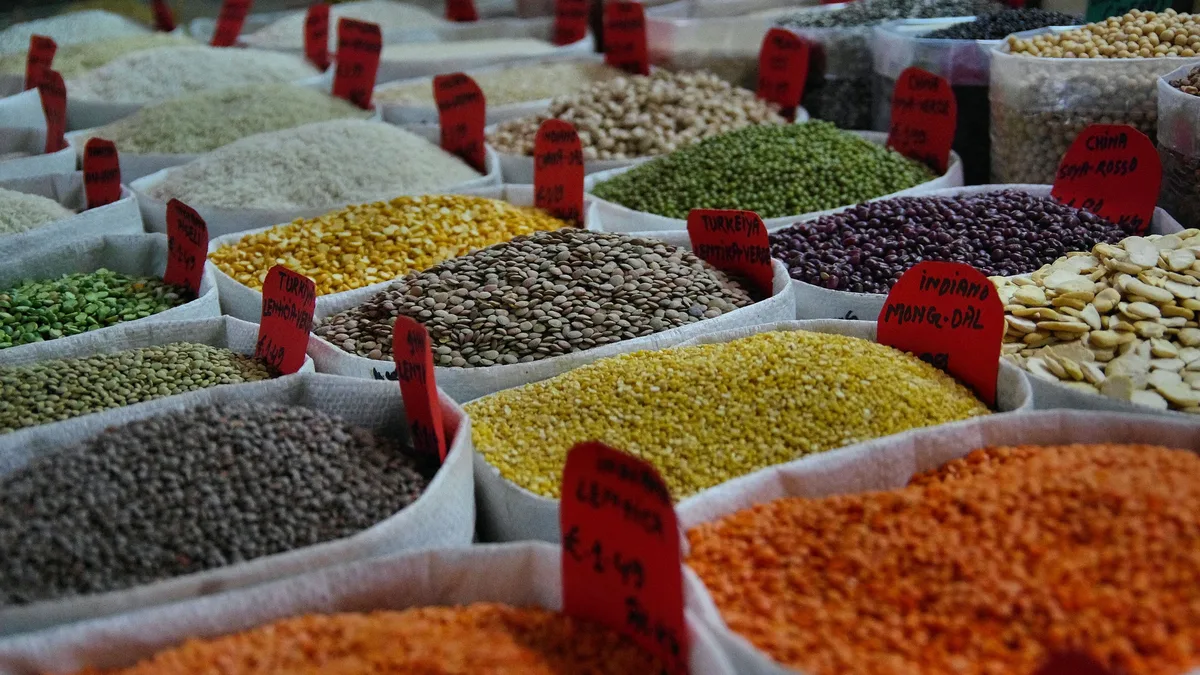
India Mandates Red Warning Labels for High-Salt, Sugar
India's food regulator has finalized stricter front-of-pack warning label rules, requiring a red symbol if any single ingredient exceeds limits...
EQT Group plans $50 billion India investment
Global private equity firm EQT Group will invest $50 billion in India by 2030, expanding into data centers, infrastructure, and mid-market ventures.
Skechers shifts Asia strategy to performance
A year after going private, Skechers is deepening its focus on performance categories and tailored retail experiences across Asia, according to...

Icicle appoints Sabato De Sarno as creative
Shanghai-based luxury label Icicle has named former Gucci creative director Sabato De Sarno to lead its creative direction.

Slikk shifts focus from speed to curation
Fashion quick-commerce startup Slikk is pivoting its growth strategy towards private labels, personalized curation, and larger dark stores, moving...

Carrefour targets 50 India stores in three-year expansion
Carrefour plans to open 50 stores in India within three years through a partnership with Apparel Group, focusing on compact formats, local private...