Assam to launch India's first public proton therapy centre
The Assam government will build India's first public proton beam therapy centre in Guwahati through a partnership with Belgium's IBA, funded by Rs 315 crore from the World Bank and Rs 285 crore from the state.
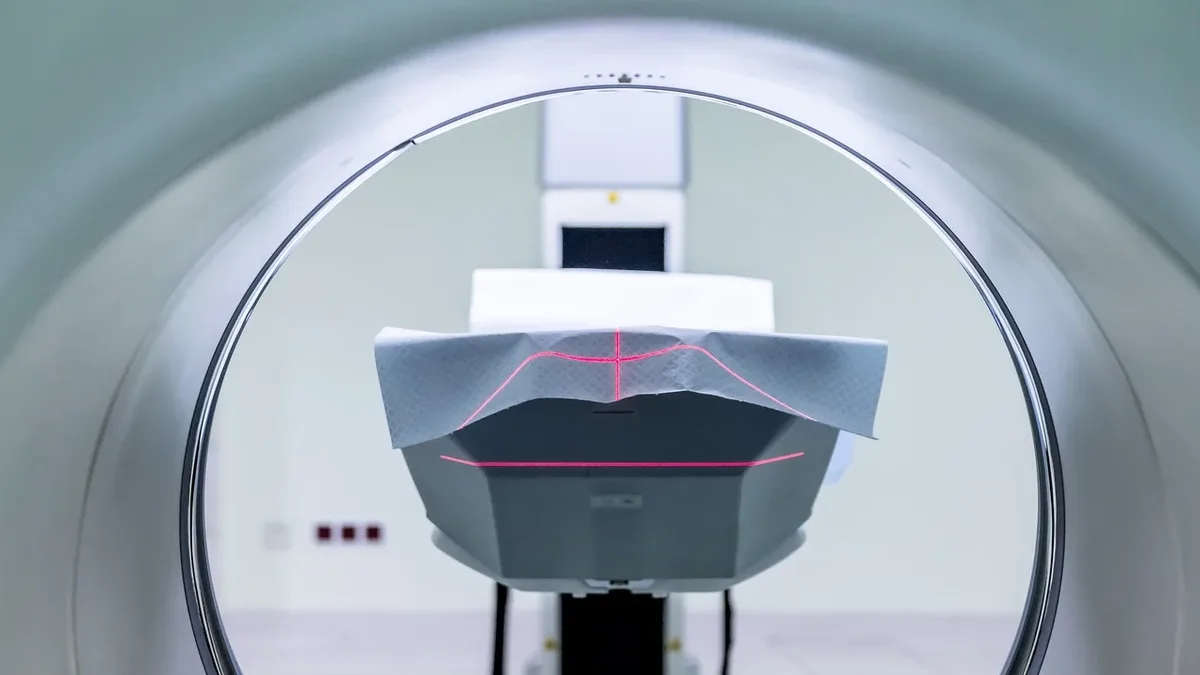
The Assam government has signed an agreement with Belgium's Ion Beam Applications (IBA) to establish India's first public proton beam therapy centre in Guwahati. The facility will be built under the Assam State Secondary Healthcare Initiative for Service Delivery Transformation project, with state cabinet approval granted in August.
Chief Minister Himanta Biswa Sarma announced the project cost at Rs 600 crore. The investment will cover machines, training, and building construction at the Gauhati Medical College and Hospital site. Setting up the facility will take a minimum of three years.
Public investment enables affordable cancer care
The Rs 600 crore project will be funded with Rs 315 crore from the World Bank and Rs 285 crore from the state government. This public financing model aims to make the advanced treatment accessible. Proton beam therapy was previously only available in private hospitals in India at costs reaching up to Rs 50 lakh per course.
The Guwahati centre signals that advanced radiotherapy belongs in the public health system. It is not a luxury. The move is part of a broader expansion, with 17 cancer hospitals being set up across Assam. Twelve are already functional.
Expanding access beyond private hospitals
India currently has only two proton therapy centres, both in the private sector. The new public centre will directly address a critical access gap for patients in the Northeast. Families from the region typically travel to Chennai or Mumbai for six to eight weeks for treatment. Some cannot make the trip and settle for less suitable care or none at all.
The centre aims to improve cancer care for children specifically and to make Assam a global hub for cancer care and medical tourism. Its success will depend on trained staff, child anaesthesia services, and good imaging capabilities. Imaging relies on short-lived radioactive tracers produced in only a few Indian cities, posing a logistical challenge.
A technically complex treatment
Proton therapy uses protons, tiny positively charged particles. They are accelerated to roughly two-thirds the speed of light in a cyclotron. Magnets then steer the beam into the patient.
The treatment's precision comes from the Bragg peak, a sharp burst where protons surrender almost all their energy at the tumour site. Protons have no exit dose, meaning the beam stops at the tumour. This reduces stray radiation and the estimated risk of second cancers in young patients.
The therapy is non-invasive and painless, like conventional radiotherapy. Young children often need a short anaesthetic to stay still during sessions. Proton therapy belongs to the hadron therapy family, which includes heavier particles like carbon ions.
Global rarity of proton therapy infrastructure
With only 40 proton beam therapy centres worldwide, the Guwahati facility represents a significant addition to global capacity. The high cost stems from the complex infrastructure, including a particle accelerator, multi-tonne magnets, a rotating gantry, and thick concrete walls. A single centre can cost several hundred crore rupees before treating its first patient.
A high-energy proton accelerator costs five times or more than a conventional radiotherapy machine and requires four to five times the space. The two existing Indian centres are the Apollo Proton Cancer Centre in Chennai and the facility at Tata Memorial Centre's ACTREC in Navi Mumbai. The Chennai centre was the first in India and South Asia built for proton therapy and is India's first cancer centre accredited by Joint Commission International.
The Assam centre will begin operations after completing its three-year construction phase. It will address the current gap where Northeast families must travel to Chennai or Mumbai for treatment.